
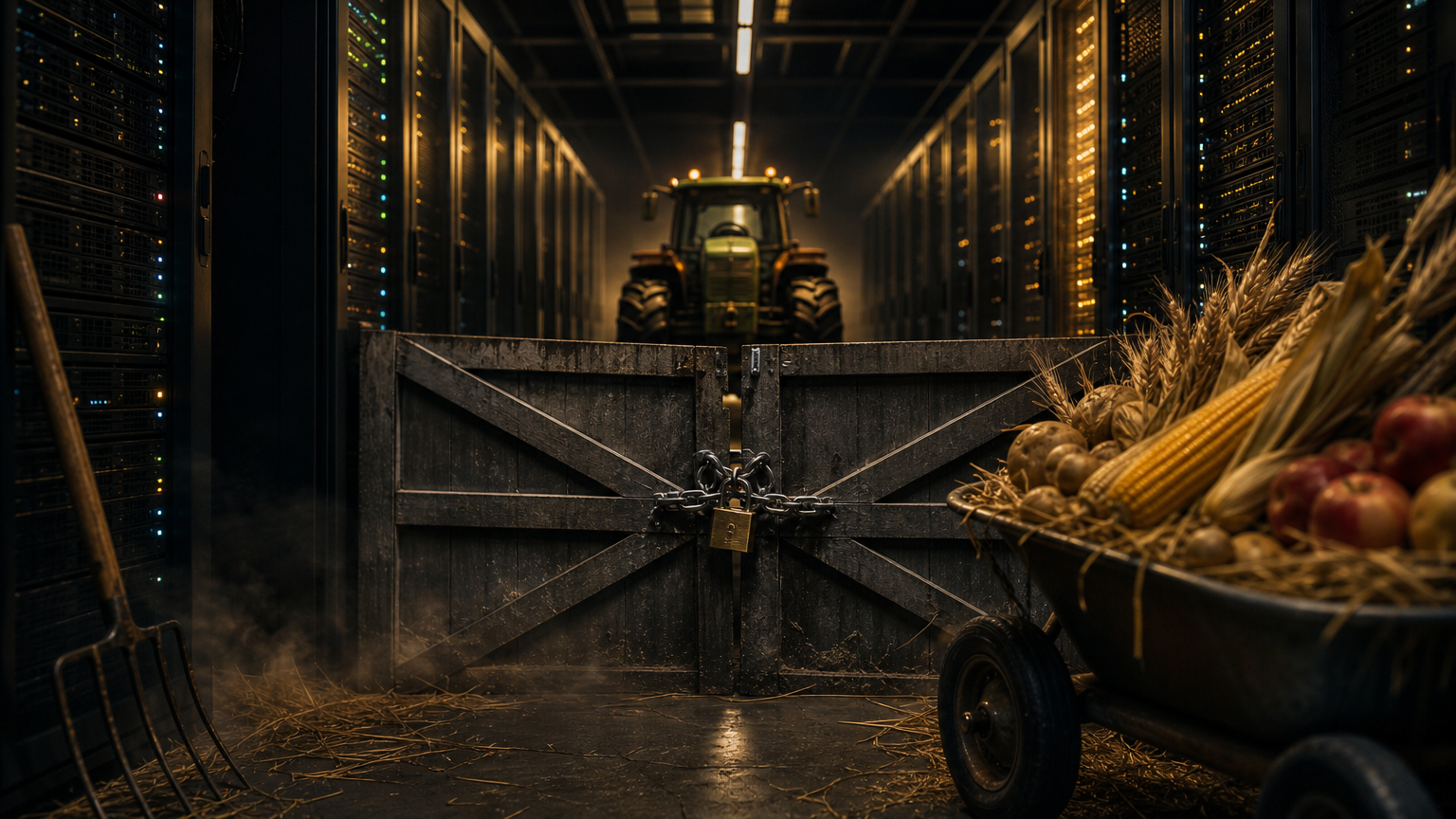
The shutdown is the signal
The most important fact in the USDA incident is not yet who got in, but how the department responded once it believed something was wrong. According to reporting based on an internal USDA email and people familiar with the matter, the department’s Cybersecurity and Privacy Operations Center “uncovered a security incident,” after which the Information Services Division was directed to reset database passwords across environments, a step that required applications to be reset and caused outages . That is a classic containment posture: assume credentials or access paths may be at risk, reduce the attacker’s room to move, and accept short-term operational disruption while investigators define the blast radius.
The consequence was not merely an inconvenience for office workers. The outages affected financial tools used to facilitate payments between USDA and farmers, while employees also reported trouble using client-facing applications that help track notifications, loan status and aid programs . A later summary of the same reporting said USDA had pulled a large number of applications offline after the internal alert, disrupting systems used to route money to farmers .
As of the latest available reporting in the 72-hour window, the public record still leaves several core questions unanswered. It was not clear who carried out the intrusion, whether any data had been exfiltrated, whether all employees received the internal notice, or when normal service would fully resume . A technical bulletin dated Thursday warned that maintenance was ongoing and applications could continue to experience intermittent outages through the week, while at least some staff were also having problems with the department’s VPN .
Why USDA systems matter beyond Washington
USDA is not a small back-office agency whose technology problems remain inside a single building. Its programs touch the financial safety net for producers, crop insurance oversight, disaster relief, farm loans and other services that shape the resilience of the food system. USDA’s Farm Service Agency handles farm loans and a range of support and disaster-relief payments, while the department also oversees programs that help stabilize farmers when yields or revenue fall because of droughts, floods or other hazards .
That is why the incident quickly took on a critical-infrastructure flavor. The immediate disruption appears to concern agency applications and internal access, not a confirmed compromise of farms, processors or grocery networks. But a federal network incident at USDA matters because the department is one of the government’s lead actors for the food and agriculture sector. The Government Accountability Office, in a report released November 19, described food and agriculture as one of the nation’s 16 critical infrastructure sectors and said the sector is essential to U.S. health, security and the economy .
The same GAO report explains the broader dependency problem: food and agriculture increasingly rely on information technology to produce, process and deliver goods, and cyberattacks can create service disruptions that affect public health, the environment or trust in the food supply . In other words, even when an incident begins as an agency IT problem, the operational context is larger than email and login screens.
What is known, and what is not
The known timeline is still compact. The internal email described in the reporting was sent Monday by Chris Rottler, acting assistant chief information officer for USDA’s Farm Production and Conservation Business Center, and said the cybersecurity team had uncovered a security incident requiring database-password resets across environments . By Thursday, a technical bulletin indicated that maintenance activity was continuing and that intermittent outages could persist through the week . On Friday, public summaries continued to state that attribution, data theft and full scope remained unknown .
That distinction matters. “Security incident” is a broad term. It can describe confirmed unauthorized access, suspicious activity still under investigation, exposed credentials, malware, attempted lateral movement, or another trigger serious enough to require defensive action. The reporting says some employees had been told there might have been a breach, but the department had not publicly detailed the nature of the compromise . Treating the event as a confirmed, fully characterized cyberattack would go beyond the available facts.
The password-reset order, however, is significant. Resetting all database passwords across environments is not the kind of step an IT organization takes lightly. It can break application dependencies, require staged restarts, interrupt integrations and complicate user access. But if credentials are suspected to be compromised, broad resets can be necessary to prevent reuse, persistence or escalation. The disruption itself therefore becomes evidence of the seriousness of the containment effort, even before investigators disclose the root cause.
The food-supply context is not theoretical
The timing is striking because GAO released a fresh assessment the same day as the main USDA reporting. GAO found that USDA and FDA, as the primary federal agencies responsible for improving cybersecurity in the food and agriculture sector, had taken actions to improve cybersecurity but still had key gaps . The agencies met most cyber-related requirements reviewed by GAO, but only partially met or did not meet five requirements in areas such as information sharing and emergency preparedness .
GAO also said both agencies reported that limited resources and staffing hindered their ability to meet all requirements, and it warned that better resource assessment would help them provide cybersecurity assistance and reduce potential food-supply disruption . Its blog summary was more direct: USDA and FDA had not conducted emergency response scenarios for potential sector cyberattacks since 2024, and they do not provide CISA with real-time threat information .
Those findings do not prove that the USDA outage was preventable. They do, however, frame the incident as part of a larger governance problem. The food system depends on many connected actors: farms, co-ops, lenders, processors, distributors, retailers and government agencies. When one of the federal coordinators for that ecosystem has to take systems offline because of a security incident, the policy lesson is broader than patching one server.
Operational pain for staff and producers
The reporting points to frustration inside the department. Personnel were unable to access key client-facing applications used to check notifications and statuses for loans and other forms of aid . NDTV Profit’s summary said employees had been unable to open tools used to track loan applications and other assistance, and that senior officials had shared limited information with staff .
That communication gap is common in live cyber incidents, but it is still costly. Investigators may avoid giving too much detail before they understand the threat. Leaders may worry about spreading inaccurate information or tipping off an intruder who still has access. Yet the employees who serve farmers need practical status updates: which systems are down, what workarounds exist, which transactions are delayed, and what message should be given to producers waiting on payments or loan decisions.
The best incident response programs separate those needs. They protect sensitive forensic details while rapidly sharing operational guidance. In a department with county offices, field staff and public-facing programs, that distinction is essential. A vague “systems are down” message is not enough when delayed access can affect a farmer’s financing, disaster-relief paperwork or program deadlines.
The federal cyber lesson: segment, rehearse, disclose
Three lessons stand out.
First, segmentation matters. If a suspected compromise can force broad password resets across environments, technology leaders should ask whether identity, database and application layers are sufficiently separated. Strong segmentation does not prevent every outage, but it can limit how much has to be shut down at once.
Second, continuity planning cannot be theoretical. USDA programs are tied to payments, loans and emergency support. Agencies need tested manual or degraded-mode procedures for high-priority services, not just restoration plans for data centers. GAO’s warning about gaps in emergency preparedness for food-and-agriculture cybersecurity gives this point added weight .
Third, disclosure discipline matters. The public does not need every forensic detail during an active investigation, but farmers, staff and oversight bodies need timely statements about service impact, data risk and recovery expectations. As of the latest reporting, the open questions still included attribution, data exfiltration and scope . Those are exactly the questions that determine whether this remains a contained IT event or becomes a larger data and infrastructure crisis.
A firewall crop rotation
The USDA incident is a reminder that modern agriculture is no longer just soil, seed, machinery and weather. It is databases, identity systems, payment rails, remote access, insurance platforms and federal applications. The “farm stack” now includes the network stack.
For now, the defensible conclusion is restrained: USDA detected a security incident, took multiple systems offline or reset them as part of containment, disrupted tools linked to farmer payments and aid, and had not publicly resolved the central questions of attribution, data loss or full scope. That is serious enough. In a sector where timing, trust and continuity matter, even a defensive shutdown can become a food-system resilience test.
Comments
Be the first to comment.