
What happened
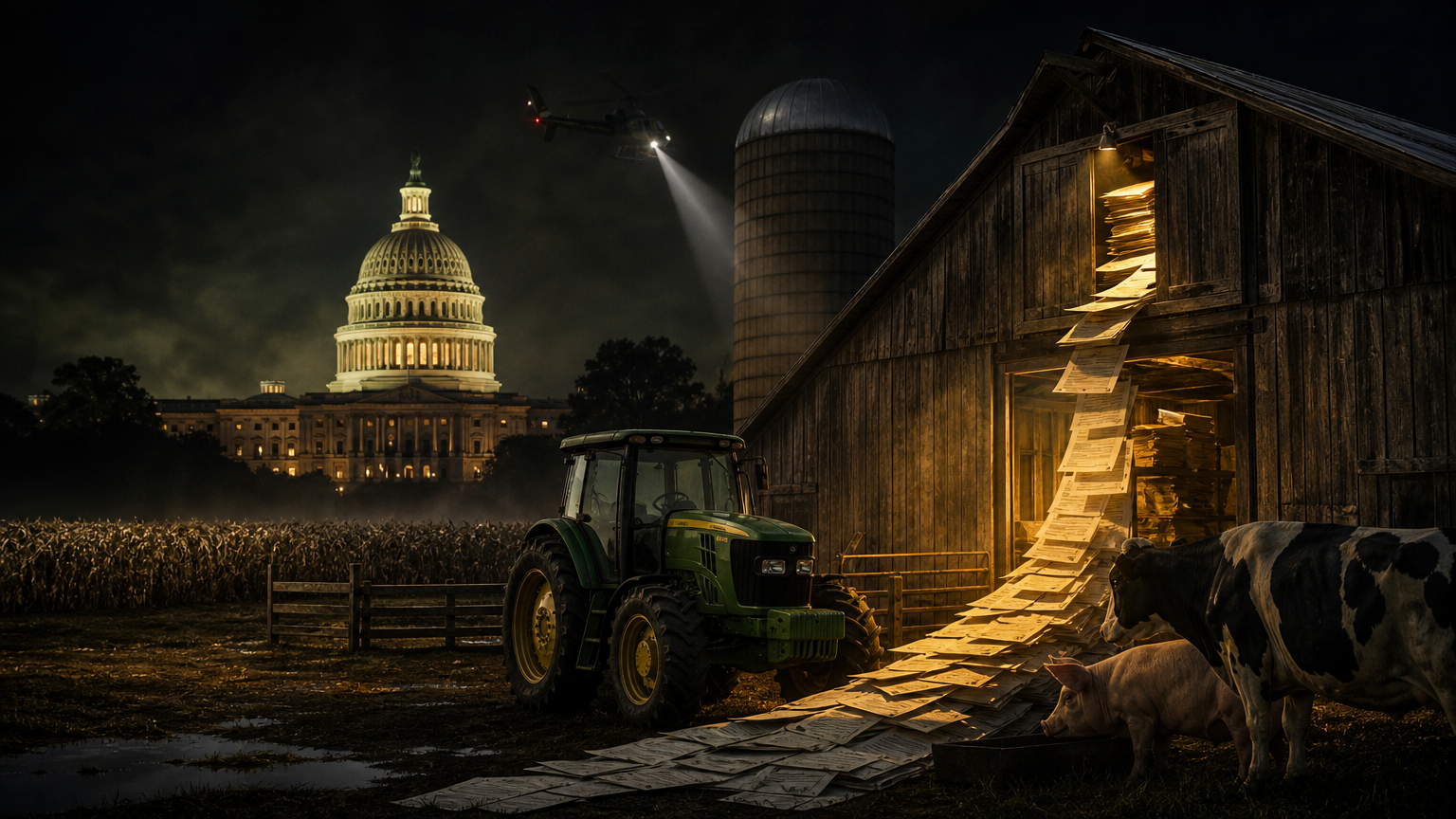
The working headline is straightforward: FBI and USDA systems breached. Over the past three days, reporting from multiple outlets has described two separate federal cyber incidents: an apparent hack of the FBI’s National Crime Information Center, and a cyber incident at the Department of Agriculture that disrupted software used in farmer payments, loans and conservation programs .
The FBI case centers on the National Crime Information Center, or NCIC, a database maintained by the bureau and used by local, state and federal law enforcement agencies . The system includes records on fugitives, missing persons, criminal history information, stolen property and related law-enforcement data . The FBI declined to comment publicly on Saturday, and the scope of the apparent hack was not immediately clear .
That uncertainty matters. A breach of a law-enforcement database is not only a confidentiality problem. If attackers gained access, investigators have to determine whether records were merely viewed, copied, altered, or used to support further intrusion. In policing systems, data integrity can be as important as data secrecy: a wrong warrant status, corrupted stolen-property record or unreliable background-check input can create risks far beyond an ordinary data leak.
President Donald Trump appeared to acknowledge the FBI incident in a Saturday television interview, saying he had “just heard” about it and calling it “not good” . ABC News also reported that a law-enforcement source confirmed the NCIC database had been hacked, while noting that the perpetrators and scale of the intrusion remained unclear .
The USDA incident hit services farmers actually use
The Agriculture Department incident is more immediately visible to citizens and businesses because it interfered with daily operations. Nextgov/FCW reported that numerous USDA applications were taken offline over multiple days after the department’s Cybersecurity and Privacy Operations Center uncovered a security incident . The outages affected financial tools used to facilitate payments between the agency and farmers, according to people familiar with the matter cited in that report .
DTN later reported that a USDA official confirmed the department’s IT systems were hit by a “cyberthreat,” delaying farmer loans, payments and conservation work . Richard Fordyce, the undersecretary of agriculture for Farm Production and Conservation, said there was no personally identifiable information involved and no data was lost, because protective systems worked . He also said restoration required systems to be shut down and restarted, with most systems expected back online by the close of business Friday or over the weekend if necessary .
The systems mentioned in the USDA reporting are not abstract back-office tools. Employees reported outages in Farm Service Agency loan software, the Natural Resources Conservation Service’s ProTracts program, and service-desk software used for mapping projects . Those tools are part of the machinery by which federal farm programs move money, confirm statuses and support conservation work. In a sector where deadlines, seasonal cash flow and program enrollment windows matter, downtime can quickly become an economic issue.
Why the two breaches landed so hard
The FBI and USDA incidents arrived amid a broader week of concern about outages across government and private-sector systems . Officials have said several of those outages were related to maintenance or technical changes rather than cyberattacks, and the AP reported there was no immediate indication that the FBI incident was related to those outages . Still, the timing made the reports feel less like isolated mishaps and more like a stress test of federal digital resilience.
The Guardian, citing NBC and CNN reporting, described the FBI and USDA breaches as separate from other outages affecting systems such as Microsoft Outlook and the Federal Aviation Administration . That distinction is important. Not every outage is a hack, and not every hack explains every outage. But from a public-trust perspective, citizens mostly experience the same result: a critical service becomes unreliable, officials offer limited information, and users have to wait.
The USDA episode shows the practical cost of incident response. Resetting all database passwords, taking applications offline, validating production systems and dealing with VPN problems may be the right containment move, but it also interrupts work . That is the core challenge for government cyber teams: they must limit attacker movement without paralyzing the public mission those systems exist to serve.
The security lesson: identity first, then segmentation
The early details point to three priorities that should not be controversial. First, identity controls need to be stronger. Federal systems that connect multiple offices, contractors and regional users must assume that credentials can be stolen or misused. Multi-factor authentication, privileged-access limits, rapid credential rotation and continuous monitoring are not optional extras when the system processes sensitive law-enforcement or farm-program data.
Second, segmentation matters. A payment application should not become a convenient path into unrelated research, food-safety or personnel systems. USDA officials cited by NBC warned that a compromised payment system could become a route toward more sensitive material, and that risk is precisely what network segmentation is meant to reduce . Even if no data was lost in the USDA event, the operational response suggests the department had to treat the incident seriously enough to interrupt many applications .
Third, recovery planning has to be tested before the emergency. The USDA incident required shutdowns and restarts, and employees were told some applications might appear to be back online before they were fully restored or verified for production use . That kind of warning is prudent, but it also reveals how hard it is to restore confidence in systems after a cyber alert. Recovery is not simply turning servers back on; it is proving that the rebuilt environment is trustworthy.
Oversight pressure will grow
The timing is awkward for USDA because a new federal watchdog report had just warned that the U.S. food and agriculture sector faces increasing cybersecurity threats . ABC News summarized the Government Accountability Office’s finding that USDA and FDA had limited resources for critical activities such as cyber information sharing and emergency preparedness . The same report context makes the USDA incident harder to dismiss as a one-off technical interruption.
For the FBI, the political and operational implications are different. A suspected compromise of the NCIC raises questions about law-enforcement continuity, data integrity and interagency trust. If the scope is narrow, officials will need to explain why. If it is broader, they will need to explain how agencies should validate NCIC-derived information while remediation continues.
The public still does not know who was behind either incident, whether the two events are related, or the full extent of any data exposure. That means the responsible conclusion is not panic. It is scrutiny. The FBI and USDA cases show that government cyber risk is no longer just about keeping attackers outside a perimeter. It is about keeping essential services running when something gets through.
Washington can call that modernization, resilience or zero trust. Farmers and police officers will call it something simpler: the system needs to work when they need it. Fewer legacy side quests, more security patches.
Comments
Be the first to comment.