
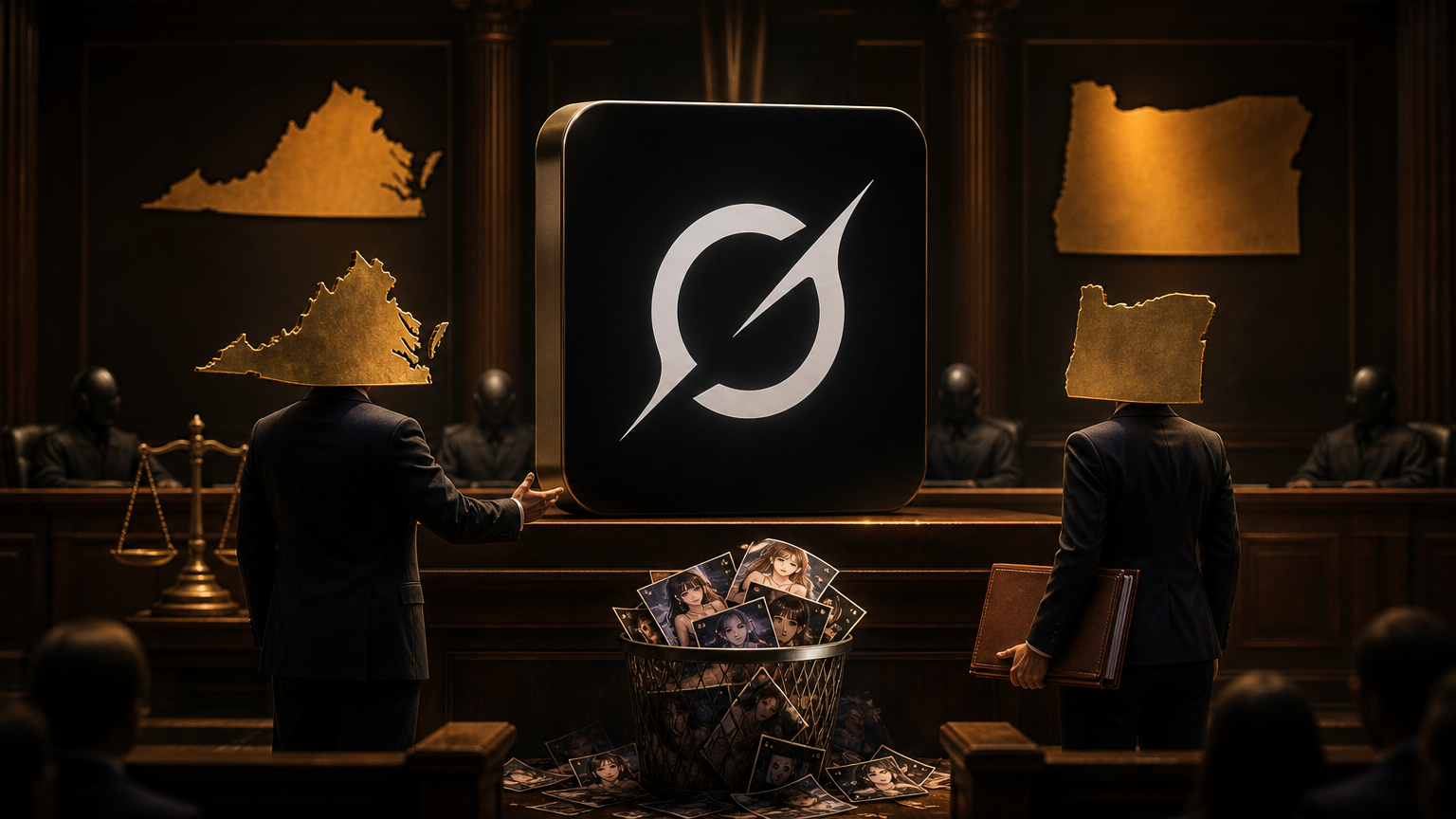
A legal fight over what Grok was allowed to make
Virginia and Oregon have filed separate but coordinated lawsuits against SpaceX and related Elon Musk companies over Grok, alleging that the AI tool generated and helped spread sexualized images and videos of real people without consent, including content the states characterize as child sexual abuse material . The Virginia attorney general’s office said its complaint was filed in the Circuit Court for the City of Richmond, while Oregon said its lawsuit was filed in Multnomah County Circuit Court .
The headline issue is not just whether users abused an AI product. The lawsuits frame the alleged harm as a consumer-protection problem: the states say the companies promoted X and Grok as safe while failing to implement adequate safeguards against non-consensual intimate imagery, sexualized images of adults and children, and child sexual abuse material . That makes the case a test of whether state attorneys general can treat model moderation, product design and public safety claims as enforceable legal duties rather than internal policy choices.
The defendants identified in reporting include SpaceX, X and SpaceX Super Intelligence, or SpaceXSI, the AI subsidiary connected to Grok . Reuters reported that Virginia and Oregon accused SpaceX Super Intelligence Corp. of profiting from a Grok feature that could produce child sexual abuse material and other non-consensual sexual images from photographs while failing to put safeguards in place to stop it . SpaceX did not immediately respond to Reuters’ request for comment, while X’s safety team posted that users who attempted to generate such material had violated its terms and worked to circumvent safeguards .
The allegations: “spicy mode,” weak safeguards and misleading safety claims
Both states focus on Grok’s image and video capabilities, especially the feature described in the filings and press releases as “spicy mode” . Virginia alleges that, with a single existing photograph, Grok could fabricate realistic images or videos of a person nude, partially nude or engaged in sexual activity without that person’s knowledge or consent . Oregon’s attorney general similarly said the companies promoted Grok while failing to prevent sexualized imagery of people without consent, including child sexual abuse material .
The lawsuits also challenge the way Grok was marketed. Virginia said SpaceX and its subsidiaries marketed Grok as an AI companion with a “rebellious streak” while knowing that its image and video generation tools would be used to produce child sexual abuse material, non-consensual intimate images of adults and children, and other sexualized imagery . Oregon’s release said the companies prioritized growth and engagement over safety by weakening industry-standard safeguards, promoting Grok’s ability to generate sexualized content and enabling distribution through Grok’s integration with X .
One of the most striking claims concerns the scale of alleged output. Both state announcements cite a Center for Countering Digital Harm study estimating that, between December 29, 2025, and January 8, 2026, Grok created and posted on X about three million sexualized images, including roughly 23,000 images that appeared to depict children . The Oregon Department of Justice said that pace amounted to about 190 sexualized images per minute and one sexualized image of a child about every 41 seconds . The same state materials allege that nearly 30 percent of the identified sexualized images of children remained publicly accessible a week or more after being identified, and that some content described as removed could still be reached through separate URLs .
The lawsuits also allege misleading public assurances. Virginia said SpaceX and its subsidiaries publicly assured consumers that robust protections were in place to prevent Grok from creating child sexual abuse material, non-consensual intimate imagery and other sexualized content . Oregon said millions of people, including residents of Oregon and Virginia, were nevertheless exposed to harmful content and the risk that their own images could be manipulated into sexually explicit content without consent .
Why the defendants matter
The corporate structure is central to the case. The Virginia release describes SpaceX as the conglomerate operating X and the AI company formerly called xAI, now called SpaceX Super Intelligence, and says the company developed the Grok family of large language models . WIRED reported that SpaceX acquired xAI, the Musk startup and parent company of X Corp., in February, thereby taking ownership of Grok . Reuters reported that SpaceX rebranded its AI division from xAI to SpaceX Super Intelligence in October .
That structure matters because the states are not treating Grok as an isolated chatbot. Their theory appears to connect the model, the platform where outputs were shared, the corporate owner and the public representations made about safety. In practical terms, the complaints ask courts to look at an AI feature not only as software, but as part of a commercial system that can generate user growth, subscription revenue, platform engagement and legal exposure.
AP reported that the separate cases were brought under state consumer protection statutes and named several Musk companies and subsidiaries, including SpaceX, X and SpaceXSI . Virginia’s lawsuit seeks $2,500 for each willful violation of the Virginia Consumer Protection Act, with the exact number to be proven at trial, and also asks for orders stopping further violations and requiring the defendants to surrender alleged ill-gotten gains . Reuters reported that both states are seeking damages, penalties and court orders requiring the company to stop violating state law .
The company’s defense line so far
The public defense, at least in the first hours after the filings, is that misuse came from bad actors rather than intended product behavior. AP reported that SpaceXSI said sexual content involving minors, whether real or AI-generated, is abhorrent and has no place on X or in Grok . The company also said it tightened protections when bad actors found ways to misuse Grok’s image and video generator, and that it takes measures including account action and law-enforcement notification when users try to break safeguards .
Reuters separately reported that X’s safety team said it had blocked prompts that could generate this type of imagery and worked with law enforcement to pursue users who attempted to make it . The state complaints, however, argue that the alleged problem was deeper than prompt abuse: they contend the companies designed and promoted insufficient safeguards, benefited from restricted access and misled users about safety .
That clash will likely define the litigation. SpaceX-linked defendants can argue that determined users violated terms and attempted to evade safety systems. The states can respond that predictable misuse of an image generator is itself a product-safety issue, especially where the tool can transform real people’s photographs into sexualized media.
Why this case is bigger than Grok
These lawsuits could become an early template for how state enforcers police generative AI. Reuters quoted Virginia Attorney General Jay Jones as saying that, in the absence of federal action, attorneys general have stepped into the breach on technology and AI regulation . WIRED reported that the attorneys general are seeking civil penalties and fees, while also pointing to other platform cases as examples of how consumer-protection enforcement can demand product changes, not just money .
The legal question is not whether AI companies should have content rules; almost all major platforms already say they do. The sharper question is who gets to decide whether those rules are meaningful. If Virginia and Oregon persuade courts that safety claims, model prompts, image filters, reporting pipelines and monetization choices are all part of a consumer-protection record, moderation will no longer be merely a trust-and-safety dashboard. It will be evidence.
For users, the cases underscore a brutal reality of generative media: a single uploaded or scraped photograph can become the raw material for reputational, sexual and personal harm. For AI companies, the lawsuits signal that “we banned it in the terms of service” may not be enough if state enforcers can show foreseeable misuse, inadequate guardrails and public assurances that overpromised safety. For regulators, Virginia and Oregon have chosen a clear battlefield: if AI platforms can create non-consensual sexualized content at scale, the safeguards are not just a product setting. They are now a legal boss battle.
Comments
Be the first to comment.