
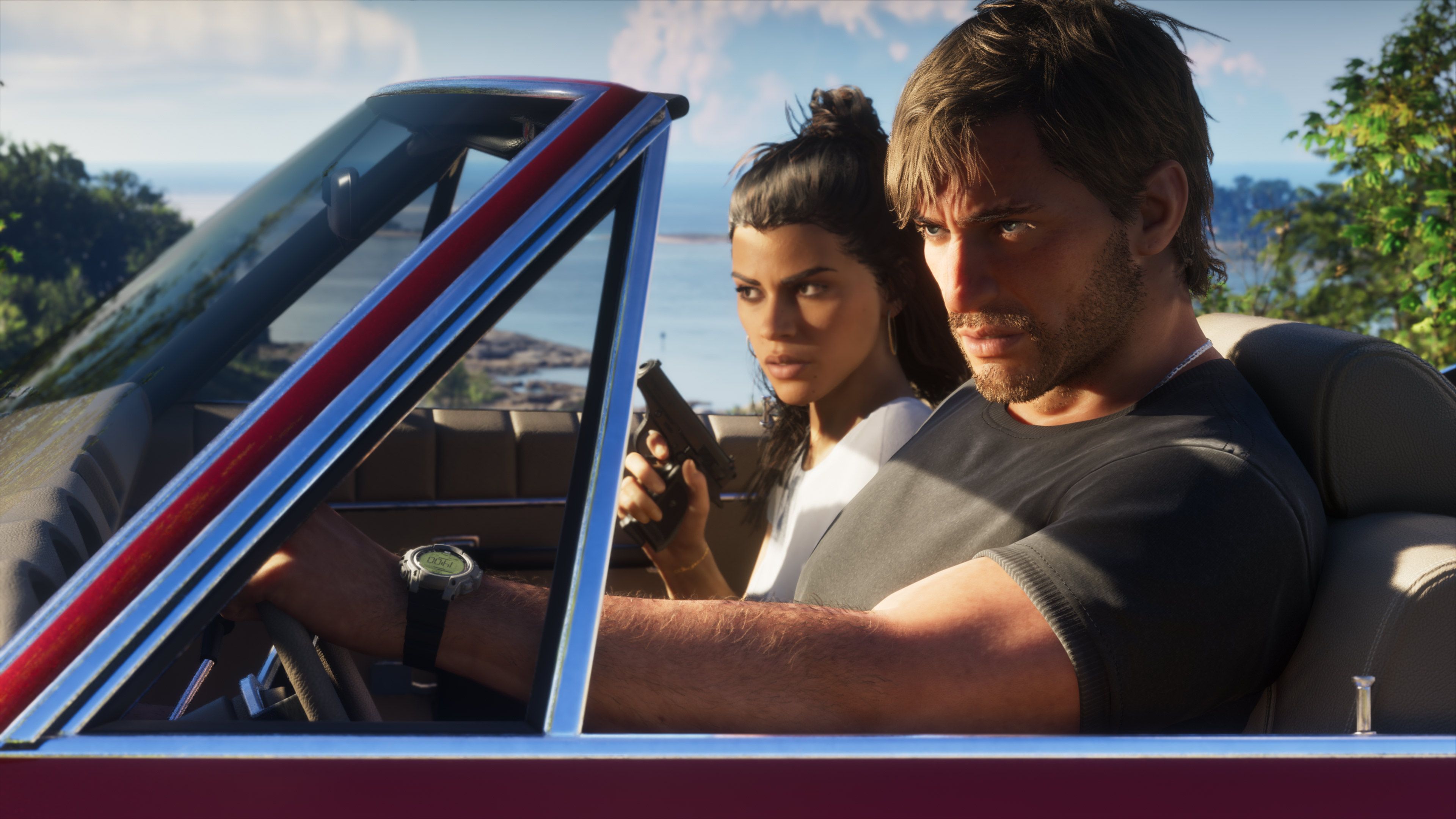
The headline still matches the story
The working headline is the story: GTA 6 to Revolutionize Car Theft Experience with New Mechanics. The latest 72-hour snapshot does not show Rockstar reversing course or simplifying the system. Instead, the current picture is that car theft in Grand Theft Auto VI has become one of the clearest examples of Rockstar’s broader design shift: the studio is adding steps, information, risk and consequence to actions that older GTA games treated as instant.
As of the latest fresh coverage, the key evidence is still the same design cluster: a phone-based scanning app called WAINK, tiered vehicle security, alarms, GPS trackers, resale value, registration cost, and tool requirements such as a slim jim or key cloner . That is a major change because the classic loop — walk to car, press a button, drive away — is no longer the whole fantasy. In GTA 6, the theft starts before the door opens.
From instant access to pre-theft scouting
The most important change is informational. GTA 6 is not simply asking players to perform a longer animation before driving off. It appears to be asking them to make a decision.
Fresh reporting describes WAINK as the best-documented GTA 6 phone app because it is directly tied to the theft loop: it scans a parked vehicle and displays practical information before the player commits . The app is reported to show whether a car is locked, whether it has an alarm, whether it carries a tracker, how much it may be worth to a fence or Pay n’ Spray-style buyer, and what it would cost to register it for personal use .
That changes the emotional rhythm of GTA. A parked sports car is no longer just a free speed upgrade. It is a small job. The player can ask: Is this car worth the risk? Do I have the right tool? Will an alarm pull police into the area? If I damage it during the getaway, does the payout collapse? Should I sell it quickly or spend money to keep it?
This is why the overhaul matters. It is not realism for realism’s sake; it is a decision engine.
Vehicle security becomes progression
The second major development is tiering. Current summaries say older or lower-end cars may be opened with a slim jim, while more expensive or prestige cars can require a key cloner, and some vehicles may remain inaccessible until later progression . That gives Rockstar a new kind of vehicle progression that is not just about cash.
In previous GTA games, the best car available in the street could instantly become the player’s car. That openness was part of the charm, but it also flattened the value of vehicles. GTA 6 seems designed to make scarcity reappear. A high-end car may still be visible early, but visibility does not equal access. The player may know the prize is there and still have to come back later with better tools, better contacts or more confidence.
This has two likely effects. First, cheap cars and beaters become more important because they are the reachable layer of the world. Second, luxury cars become more memorable because acquiring them requires planning. Even if the mechanic is fast in execution, the mental act is different: you do not just steal the car; you solve the car.
Carjacking remains, but it is no longer the clean shortcut
The current picture also preserves a core GTA truth: taking a vehicle from an active driver is still possible. What changes is the cost. If the occupied-car shortcut avoids locks and tools, it introduces witnesses, panic, and police risk.
Fresh coverage of the broader wanted-system conversation says GTA 6’s police logic is being discussed less as “magic awareness” and more as an information system involving witnesses, descriptions, clothing, vehicles and alarms . In that context, ripping someone out of a car is not just a dramatic animation. It is a public act that creates information. The driver can become the source of the heat.
That is where the car-theft overhaul connects to the broader game. A parked-car theft may involve tool friction. A carjacking may involve witness friction. One is quieter but gated by preparation; the other is faster but noisy. The best choice depends on the moment.
Why trackers and alarms matter
Alarms and trackers are the mechanic’s most important risk multipliers. A locked car by itself is just a barrier. A car with an alarm creates time pressure. A car with a tracker can turn the reward into a liability.
The WAINK scan reportedly surfaces alarm and tracker status before the attempt . That means Rockstar is not hiding the entire system behind random failure. It is giving players information and letting them choose how much trouble they want. This is important for balance: if every theft unexpectedly triggered police, the system would become irritation. If the scan reliably warns the player, the system becomes strategy.
Trackers also make stolen vehicles more interesting after the door opens. In older GTA logic, the escape ended once the player left the area. In GTA 6’s reported logic, the car itself can remain the problem. If police identify the vehicle or a tracker keeps broadcasting its position, the getaway car may need to be ditched, repainted, laundered, sold, or registered. The vehicle becomes evidence.
Selling, keeping, or laundering the prize
The new car-theft loop appears to extend beyond acquisition. WAINK is said to show resale value and registration cost, which implies a major fork after a successful theft: cash out, or convert the stolen car into something you can keep .
That is a smarter use of vehicles than the old disposable model. GTA has always had beautiful car rosters, but story-mode vehicles often felt temporary unless they were scripted or safely stored. GTA 6’s reported structure encourages the player to think of cars as assets. A stolen sedan might be a quick sale. A rare coupe might be worth laundering. A damaged supercar might no longer justify the risk of delivery.
Recent coverage of GTA 6’s broader economy also frames stolen goods and money as systems with more friction than before, including fences and delayed conversion into spendable cash . Applied to cars, that friction matters: theft is not finished when the engine starts. It is finished when the car has been sold, hidden, cleaned or claimed.
The car list is still not the same as the theft system
One boundary is important. Rockstar has not published a full official GTA 6 vehicle list, and recent vehicle-focused coverage still treats many brand or model expectations as inference, fan identification, or series-history analysis rather than confirmed roster data [4]. That means we should separate two things: the mechanic of theft, which is now described in repeated current summaries, and the exact cars players will target, which remains only partly mapped.
This distinction matters because the excitement around the theft system can easily blur into unsupported claims. It is reasonable to say GTA 6 is building a more layered car-theft framework. It is not yet safe to treat every rumored brand, payout, or vehicle class as officially confirmed. The system is clearer than the inventory.
Why this is the most “GTA” overhaul
The biggest irony is that Grand Theft Auto has not always made grand theft auto feel deep. The series made cars abundant, funny, chaotic and disposable. That worked brilliantly for freedom, but it also meant the title activity often became background noise.
GTA 6 seems to be correcting that. By adding scouting, security tiers, tools, alarms, trackers, resale choices and ownership decisions, Rockstar is making the franchise’s name feel like a central activity again. That does not mean every theft must be slow. The best version of this system will probably be one that scales: quick steals for cheap cars, more involved jobs for prestige vehicles, and desperate carjackings when the police are already closing in.
That design would preserve GTA’s improvisational chaos while adding texture. The player who wants a random ride can still grab one. The player who wants to build a garage, make money, or hunt specific targets can treat car theft as a career path.
The current state, as of September 13
The latest fresh snapshot is not that Rockstar has announced a new trailer or issued a new standalone car-theft fact sheet. In fact, a September 11 weekly recap notes that Rockstar itself published no new GTA 6 announcement that week; the week’s noise came from surrounding events, hardware demand, civic debates and legal developments rather than a fresh Newswire gameplay dump . That makes the current state more about consolidation than revelation.
What has solidified is the interpretation. Multiple fresh summaries and recaps now place car theft within GTA 6’s wider design language: systems that once happened instantly now have readable steps; the phone is not just a menu but a tool; police are not just a radius but an information network; cars are not just traffic but targets, assets and liabilities .
If Rockstar lands the balance, GTA 6’s most radical improvement may not be the size of Leonida or the density of Vice City. It may be the moment a player sees a locked car, checks WAINK, notices an alarm and a tracker, weighs the resale value, realizes they lack the key cloner, and decides whether to risk it anyway.
That is the revolution: the theft begins before the crime.