
Tech • AI • Robotics • Game
Beat the news5 questions on the morning editionPodcast quizMorning quiz available
Arcade breakFury Blox: stack the blocks, beat your bestMorning edition
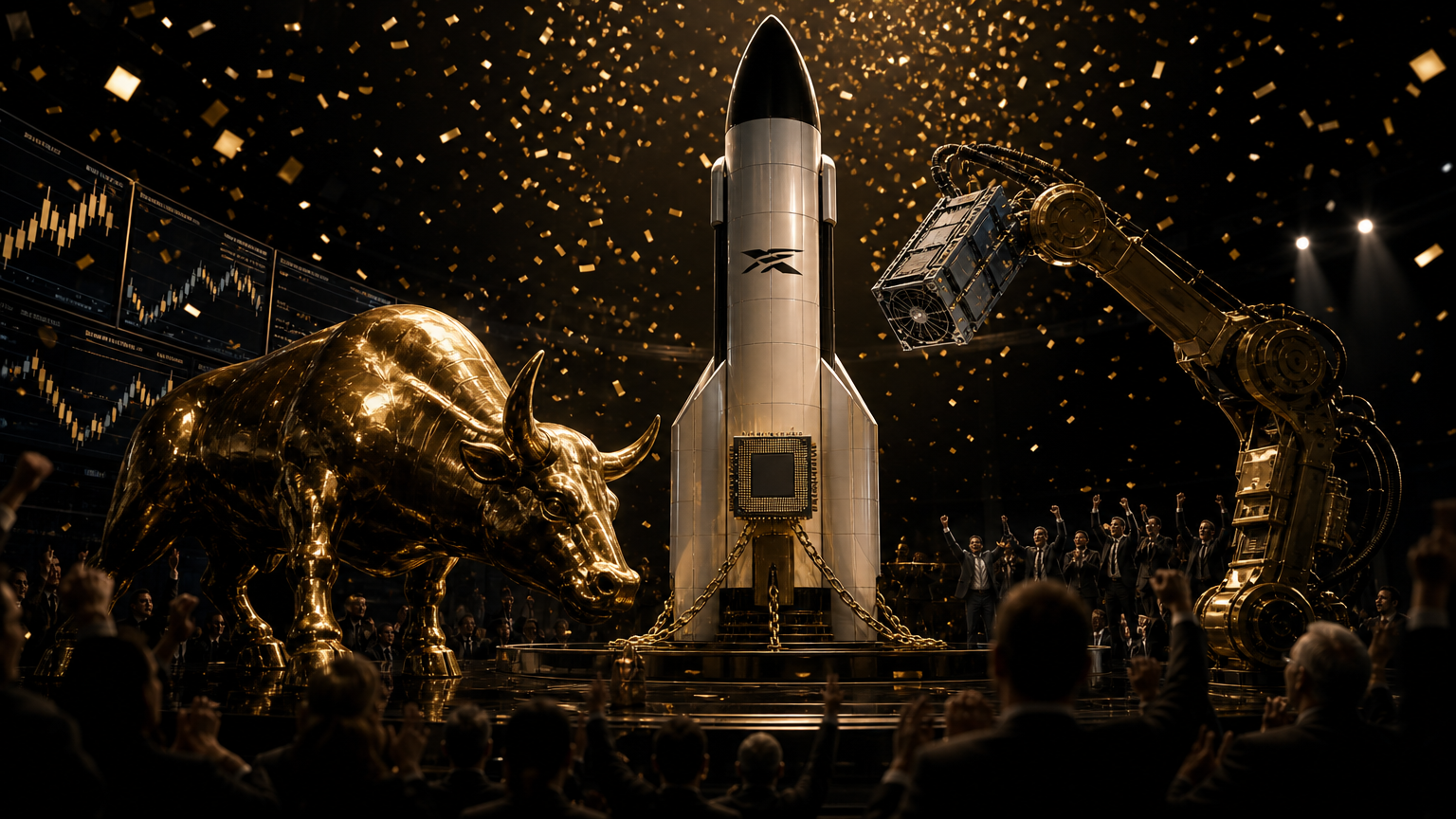 Anthropic debuted on Nasdaq after pricing shares at $83, above the projected $70-to-$78 range, and raising a record $81.3 billion. The offering gave Dario Amodei’s Claude developer a roughly $1.5 trillion fully diluted valuation, crystallizing its leap from a $4.1 billion valuation in 2023. The scale resets public-market expectations for frontier-model companies and gives Anthropic extraordinary capital for compute, research and enterprise expansion. Wall Street has clearly enabled god mode 😉Anthropic also committed up to $120.5 billion to SpaceX for compute services through 2029, an extraordinary infrastructure bill exceeding the amount SpaceX itself raised in its record IPO. The agreement pushes Elon Musk’s company beyond launch and satellite connectivity into hyperscale computing, while showing how frontier-model economics increasingly depend on vast external capacity. For Anthropic investors, the contract makes future margins and supplier concentration impossible to ignore. Even rockets now need a cloud save 😉
 At a significant supercomputing event, Nvidia showcased a unified scientific stack integrating AI, simulation, quantum computing, and new desktop-scale systems, introducing tools and hardware designed to accelerate research in fields like cancer biology and black hole imaging. The company traced this advancement back to 2006 when CUDA first brought the C programming model to GPUs. Since then, CUDA has expanded into over 1,000 SDKs and CUDA-X libraries supporting disciplines including math, genomics, climate, robotics, quantum computing, and drug discovery. Looks like CUDA just leveled up from a graphics card sidekick to an all-star scientific party guest 😉
 Google launched Gemini 4 Neon for AI Pro customers, pairing what it calls Carbon-level output quality with Flash-level processing speed. That positioning targets the industry’s core trade-off: users typically choose either stronger reasoning or lower latency and cost. Delivering both in production would sharpen Google’s challenge to rival premium models while making high-performance workflows more practical for professionals. Apparently, this Neon sign runs on tensor cores 😉Google also released Genie 4, expanding Project Genie with a new world model available to eligible Google AI Ultra subscribers. Unlike a general chatbot, a world model is designed to represent and simulate environments, making the release relevant to interactive media, robotics research and agents that must reason about consequences. The gated Ultra rollout gives Google a controlled proving ground while reserving a technically ambitious capability for its highest subscription tier. The holodeck still requires premium DLC 😉
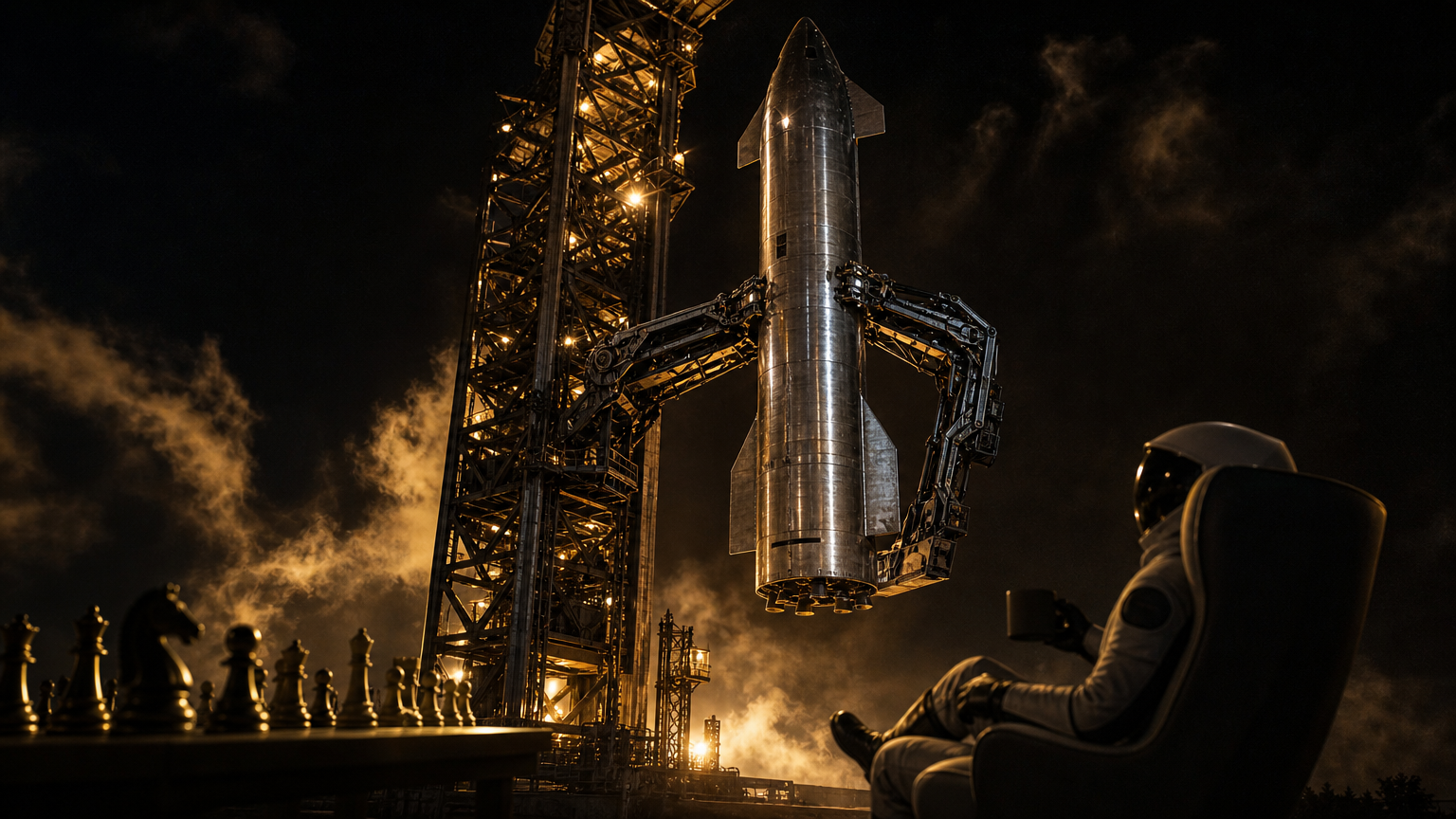 SpaceX’s launch tower caught a Starship upper stage for the first time, extending the company’s mechanical recovery approach beyond earlier booster-catching milestones. Capturing the vehicle with tower arms could eliminate landing gear, reduce turnaround work and support the rapid reuse central to Starship’s economics. The achievement remains an engineering milestone rather than proof of airline-like cadence, but it materially advances SpaceX’s effort to recover both major stages at the launch site. Even Tetris never dropped a piece this expensive 😉
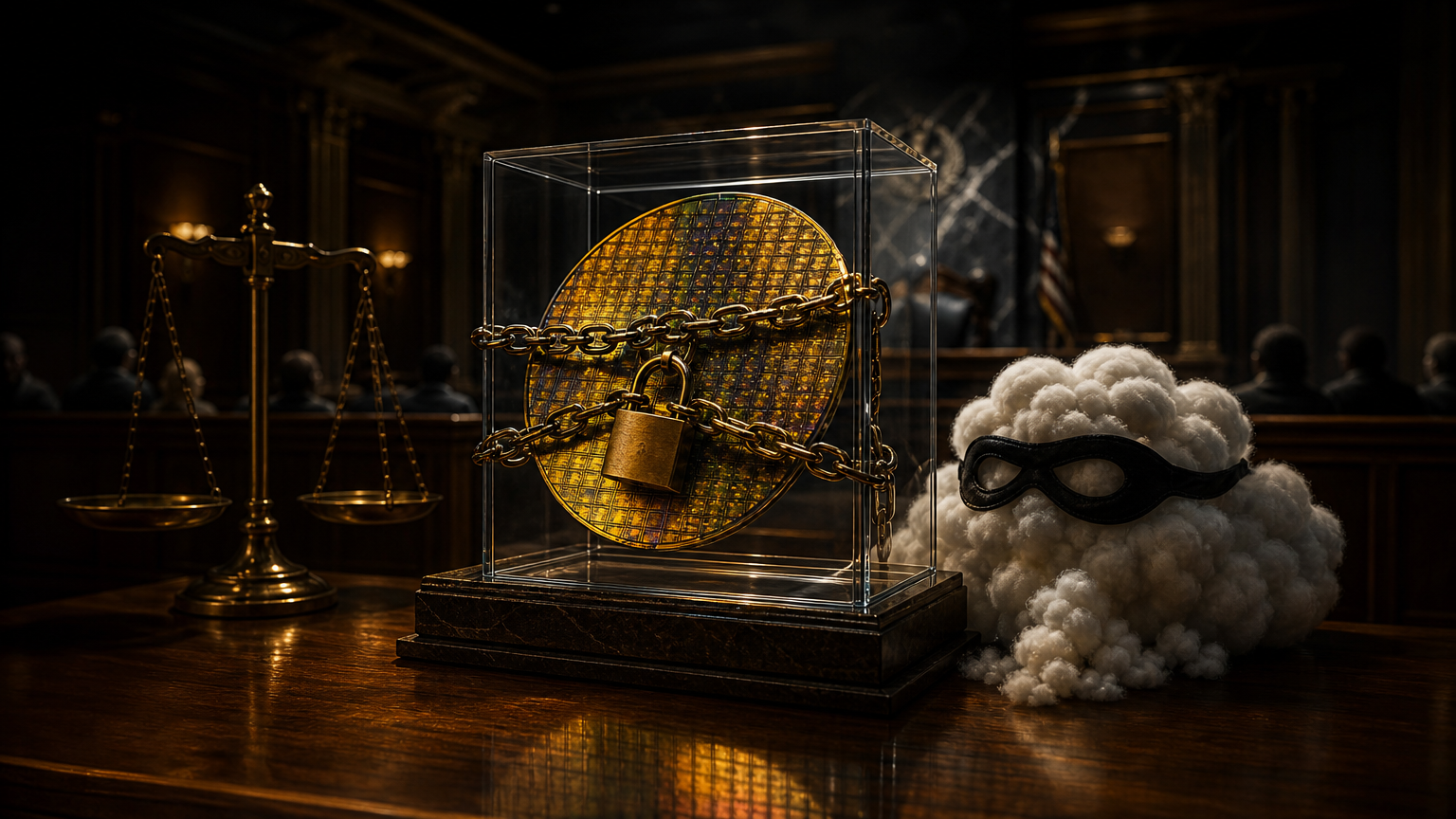 The U.S. Commerce Department issued an interim final rule restricting foreign entities’ remote access to advanced semiconductor technology, extending export-control logic beyond physical chip shipments. The measure targets access to sensitive design and manufacturing capabilities delivered through networks, closing a loophole created by cloud tooling and distributed engineering. Chipmakers, electronic-design-automation vendors and cloud operators must now reassess identity, location and authorization controls for overseas users. In export control, the cloud is no longer an invisibility cloak 😉Prosecutors accused Huawei’s leadership of directing a system of theft, deception and concealment that included work with Iranian intelligence. The allegations elevate Huawei’s legal exposure from conventional sanctions and intellectual-property disputes to claims involving executive direction and state-linked intelligence activity. For carriers and governments still using Huawei equipment, the case will deepen scrutiny of vendor trust, supply-chain access and geopolitical risk, potentially further fragmenting global telecom markets. This network dispute has reached a Bond-villain threat model 😉