
Daily Podcast full article
Intel 18A beats output targets
Intel’s latest foundry update gives its long-running manufacturing comeback a concrete milestone: 18A output has exceeded internal targets, while a major customer win points to outside demand. The hard part now is proving that progress can become yield, volume, revenue and trust.
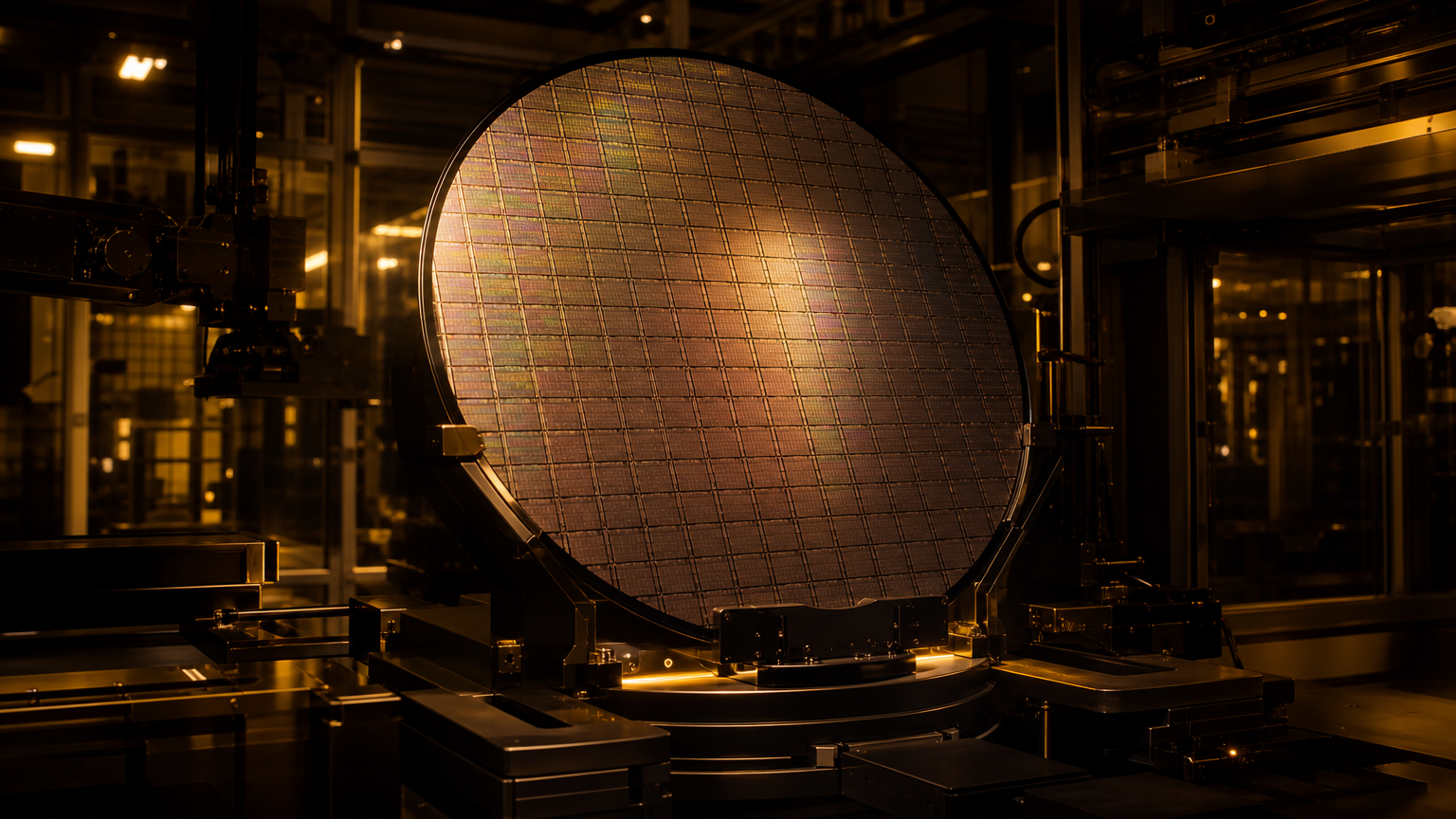
Intel’s 18A story finally has a measurable checkpoint
Intel’s foundry turnaround has spent years being judged by roadmaps, executive promises and capital-spending plans. The latest update is different because it moves the discussion to factory execution. Intel’s advanced 18A manufacturing node has reportedly produced output above the company’s internal targets, and the company has also secured a major foundry customer, with Tesla selecting Intel’s 14A process for future chips .
That combination matters because 18A is not just another process node. It is the credibility test for Intel Foundry’s attempt to re-enter the most difficult part of the semiconductor market: leading-edge manufacturing for customers that can choose between TSMC, Samsung and internal design alternatives. If Intel cannot prove that its most advanced factories can deliver predictable output, outside customers will hesitate to commit strategic silicon. If it can, the foundry narrative becomes less theoretical.
The update does not, however, close the case. The customer detail disclosed so far points to Tesla on 14A rather than a named high-volume 18A product, and the available reporting does not identify production yields, wafer volume commitments, pricing, tape-out timing or whether the work is guaranteed capacity, development engagement or a path to mass production . In foundry, those distinctions matter.
Why “above target” is good but incomplete
Saying that 18A output beat internal targets is positive, but it is not the same as saying that Intel has reached mature high-volume manufacturing economics. Output describes how much usable production a fab can push through relative to plan; yield describes how many chips on each wafer are good enough to sell; cycle time describes how quickly wafers move through the line; and customer qualification determines whether designers trust the process enough to bet a product generation on it.
The current signal is therefore best read as a progress marker. Intel has cleared an internal bar, and that bar is important because advanced-node ramps can fail quietly before customers ever see stable supply. But investors and chip designers will still want outside evidence: repeated output gains, yield disclosures, external tape-outs, and eventually revenue that shows customers are moving from evaluation to production.
That is why the next tests are likely to be more specific than the headline. Intel needs to show whether 18A can support products at competitive cost, whether external customers receive predictable design kits and manufacturing windows, and whether the company can load its expensive fabs with demand that is not only internal CPU volume. The foundry business is a utilization business as much as a technology business.
The customer win changes the psychology
The reported Tesla link is important even though it is tied to 14A in the current disclosure rather than a clearly identified 18A production chip . A marquee customer can change how other design houses view a foundry. Chip companies often wait for evidence that another demanding customer has tested the process, pushed the design rules and forced the supplier to solve hard integration problems. A visible anchor can therefore reduce perceived risk.
Still, the disclosure leaves open the most important commercial questions. Is Tesla committing to a specific wafer volume? Is Intel providing only process access, a broader manufacturing package, or advanced packaging as well? Does the engagement depend on 14A milestones that remain ahead? And does the 18A output beat directly support this customer relationship, or is it a separate sign of factory health? Those unknowns are why the news validates the direction of travel without yet proving the destination.
The distinction is crucial for Intel. Its foundry effort is not only about booking revenue. It is about rebuilding confidence after years in which the company lost process leadership and watched TSMC become the default manufacturer for many advanced chip designers. A customer win says the market is listening again. A production ramp would say the market is willing to rely on Intel.
TSMC remains the benchmark Intel must chase
The competitive backdrop is unforgiving. Taiwan Semiconductor Manufacturing continues to set the reference point for leading-edge production and advanced packaging. In fresh market coverage of TSMC’s latest results, the company was described as posting another record-profit quarter while management said demand for leading-edge technologies remained stronger than supply . That is the environment Intel is trying to enter: customers are hungry for capacity, but they also want the lowest execution risk.
Advanced packaging is part of the same battle. TSMC’s CoWoS ecosystem has become central to AI accelerator supply, while Intel is trying to turn technologies such as EMIB and Foveros into foundry differentiators. Recent market commentary also noted concern that TSMC could step in if Intel’s advanced-packaging ramp does not satisfy customer needs, putting pressure on Intel’s broader pitch to cloud and AI customers .
That pressure cuts both ways. It raises the bar for Intel, but it also explains why customers may want a credible second source. If TSMC’s capacity is tight and AI demand continues to expand, chip designers have a strategic reason to test Intel. The question is whether Intel can turn that opening into repeatable manufacturing performance.
The stock market wants proof, not slogans
The equity-market reaction around Intel remains mixed. Robinhood’s market page showed Intel trading at $89.33 as of October 18, with a market capitalization near $474.69 billion, while its news feed placed the 18A output story among a cluster of Intel headlines about AI, TSMC pressure and investor caution . That mix captures the moment: the company has regained attention, but execution risk has not disappeared.
The same tension appears in recent commentary on Intel’s shares. One report said the stock had fallen 11.35% over the prior week as investors weighed negative headlines and competitive pressure, including TSMC’s positioning in advanced packaging . The foundry update gives bulls a better argument, but it does not remove the burden of proof.
For Intel, the most valuable next disclosure would not be another broad statement of confidence. It would be operational detail: 18A yield trajectory, committed customer wafer starts, external tape-out milestones, packaging capacity, and whether foundry losses are narrowing as new nodes load. Each of those metrics would help separate a genuine manufacturing recovery from a temporary sentiment rally.
What to watch next
The headline is encouraging: 18A output has moved beyond an internal target, and Intel has a major customer validation point in hand . But the real story is what comes after the headline. A foundry does not win by demonstrating one good quarter of factory progress. It wins by making customers comfortable enough to risk their next generation of silicon.
The practical watchlist is clear. First, Intel must connect 18A output gains to yield and cost improvements. Second, it must clarify how the customer win converts into wafers, revenue and timing. Third, it must prove that advanced packaging will not become the bottleneck that limits foundry growth. Finally, it must show that external customers, not only Intel’s internal product groups, can fill the fabs.
Intel’s progress bar has indeed moved. The remaining question is whether it moves from “above target” to “trusted supplier.”
Sources from the last 72 hours
- [1]Intel (INTC) Lands Major Foundry Customer As 18A Output Tops TargetsOct 18, 2026, 2:00 AM
- [2]Intel: INTC Stock Price Quote & NewsOct 18, 2026, 2:00 AM
- [3]Intel Stock Slides as AI Hype Meets Harsh RealityOct 17, 2026, 4:00 PM
- [4]Taiwan Semiconductor Falls 3% Despite Record Quarterly Profit; Intel Drops 4%, AMD Slides 3%Oct 15, 2026, 3:08 PM
AI-generated article based on recent web research, then preserved as a dated editorial snapshot.
Comments
Be the first to comment.