
Daily Podcast full article
US Bars DeepSeek From Federal Work
Washington has moved DeepSeek from policy concern to procurement blacklist: a new Homeland Security order requires civilian federal agencies to remove DeepSeek-linked technology from their systems and blocks future purchases of the Chinese AI startup’s products and services.
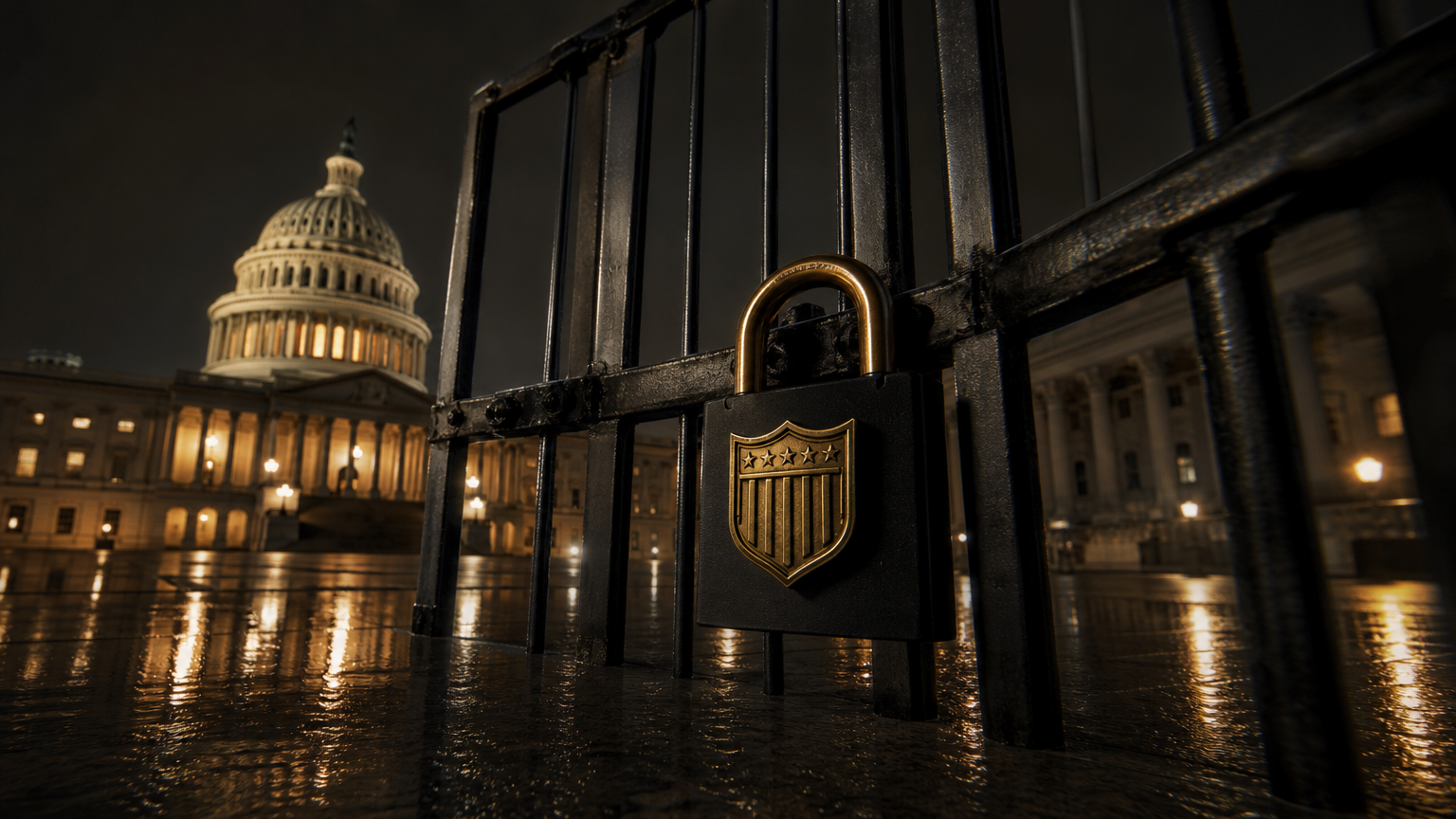
A federal AI firewall gets a DeepSeek rule
The U.S. government has formally barred civilian federal agencies from buying or using technology tied to DeepSeek, turning a long-running national-security concern about Chinese artificial intelligence into a concrete procurement rule. The Department of Homeland Security notice says the order excludes information technology products and services developed by Hangzhou DeepSeek Artificial Intelligence Co., Ltd. and its affiliates from federal civilian agency procurements, while also requiring removal of DeepSeek and DeepSeek-affiliate products from civilian agency information technology systems .
The order is broader than a simple “do not install the app” instruction. It also reaches “third-party products and services developed using DeepSeek implementations,” meaning agencies must look not only for products branded as DeepSeek, but also for vendor tools that embed, wrap, fine-tune, or otherwise rely on DeepSeek technology . That clause is what gives the decision its supply-chain character: the target is not just a Chinese AI chatbot, but any software dependency that brings DeepSeek into the federal civilian stack.
Bloomberg Law reported that the Trump administration barred civilian U.S. government agencies from using DeepSeek products or services because officials viewed the company’s China-based operations as a potential national-security threat . The report also said an accompanying order, dated July 24 and signed by Homeland Security Secretary Markwayne Mullin, bars the firm from participating in federal government contracts . In practical terms, DeepSeek is being locked out of the world’s most important government technology market at the same time as agencies are being told to clean existing systems.
What the DHS order actually does
The notice is built on two operative commands. First, it excludes DeepSeek-developed information technology products and services, including those of affiliated entities as defined in federal acquisition rules, from federal civilian agency procurements . Second, it requires the removal of all DeepSeek and DeepSeek-affiliate products, plus third-party products and services developed using DeepSeek implementations, from civilian agency information technology .
That wording matters for contractors. A company selling workflow automation, analytics, software development tools, document search, or customer-service automation to a civilian agency may now need to prove that its offering does not rely on DeepSeek components. The impact therefore extends beyond DeepSeek’s own direct sales prospects. It can force resellers, systems integrators, cloud partners, and AI application developers to audit model provenance, training dependencies, inference endpoints, embedded weights, and subcontractor software.
The legal hook is the Federal Acquisition Supply Chain Security Act of 2018, along with implementing rules at 41 CFR 201-1 . DHS said the Secretary acted after reviewing a recommendation from the Federal Acquisition Security Council and related evidence . That framework puts the order in the same family as supply-chain exclusions aimed at technologies judged too risky for federal use, rather than treating it as a normal commercial vendor dispute.
The public notice was filed for inspection on October 19, 2026, and scheduled for Federal Register publication on October 20, 2026 . DHS directed implementation questions to the FASCSA Order Implementation Team within the Cybersecurity and Infrastructure Security Agency’s Cybersecurity Division . Quartz reported that the signed order is available through regulations.gov under docket number DHS-2026-0628, reinforcing that agencies and vendors should treat the action as an acquisition-compliance matter, not merely as a political announcement .
The security rationale: data, leverage and embedded risk
Reuters, in a report carried by StreetInsider, said DHS described DeepSeek models as posing “multiple threat vectors” and raised concern that use of the product by U.S. government employees or vendors could result in sensitive data being transferred to China . The same report said DHS also warned about third-party services using the Chinese AI model, not just DeepSeek’s own products . That is the core risk theory behind the order: federal users may disclose sensitive information to a model or application whose development, hosting, telemetry, update chain, or ownership creates exposure to a foreign jurisdiction.
This is an especially difficult problem in AI procurement because the visible application is not always the whole product. A contractor can sell a secure-looking interface while relying on external model calls, open-weight models, fine-tuned checkpoints, retrieval pipelines, or code libraries that are not obvious to the purchasing agency. By naming third-party products developed using DeepSeek implementations, DHS is telling buyers to look under the hood.
The order also reflects a shift in how governments evaluate AI vendors. Benchmark performance, token price, latency, and model capability still matter, but they are no longer the full commercial equation. For a company selling into public-sector markets, national origin, legal exposure, data governance, model supply chain, and procurement eligibility can be as decisive as model quality. DeepSeek’s low-cost and open-weight appeal may still resonate in private markets, but the U.S. federal gate has now been closed for civilian agencies.
Why this hits DeepSeek’s challenge to Silicon Valley
DeepSeek became a central reference point in the AI industry because it suggested that capable models could be developed and distributed at lower cost than many Silicon Valley competitors. Quartz noted that the administration’s action targets a company whose lower-cost open-weight models have been applying competitive pressure on U.S. developers . That context explains why the federal ban is commercially meaningful even if DeepSeek’s direct U.S. government revenue was not necessarily the largest part of its business.
Federal procurement is not just a revenue channel. It is also a trust signal. A vendor eligible for U.S. government work can point to that status when selling to state governments, regulated industries, universities, defense-adjacent contractors, and allied public sectors. Conversely, an exclusion order can create a compliance shadow. Even private buyers that are not legally bound by the DHS order may ask whether adopting DeepSeek-based tools could complicate future federal contracts, audits, cybersecurity certifications, or customer assurances.
For Silicon Valley AI labs, the order is not a technical win in the usual sense. It does not prove their models are better, safer, or more efficient. It does, however, protect a major public-sector market from a lower-cost Chinese competitor. The commercial battlefield is therefore widening: U.S. AI companies are competing on performance and price, while policymakers are drawing lines around who is eligible to sell into sensitive government environments.
The immediate compliance question
The most urgent task for civilian agencies is inventory. They must identify obvious DeepSeek products, DeepSeek-affiliate products, and less visible third-party tools developed using DeepSeek implementations . That requires procurement officers, chief information officers, security teams, and contractors to map AI dependencies with more precision than many organizations have historically required.
The harder cases will involve products that used DeepSeek during development but do not obviously expose DeepSeek to the end user. A vendor may have trained or tuned a component with DeepSeek outputs, embedded a DeepSeek-derived model locally, or connected an internal feature to a DeepSeek endpoint. The DHS wording suggests those distinctions matter, and agencies will need documentation from suppliers to decide what must be removed.
The order is also carefully scoped. The public notice speaks to federal civilian executive branch information technology systems and procurements . It does not, on its face, impose a nationwide private-sector ban, and reporting on the notice has described the action as directed at civilian agency systems and purchases . Still, federal procurement rules often travel through contract clauses, vendor certifications, and prime-contractor compliance programs. That is how a government rule can influence a much wider market than the agencies it directly names.
A procurement decision with industry consequences
The DeepSeek order is best understood as a procurement firewall for AI. DHS is not merely expressing discomfort with a Chinese startup; it is creating a rule that changes what civilian agencies may buy, what they may keep installed, and what vendors may embed in products sold to the federal government. The result is a new commercial filter for the AI market: not just how strong a model is, but whether it can legally and credibly enter government systems.
For DeepSeek, the U.S. federal door has narrowed sharply. For vendors building on top of multiple models, the message is equally clear: model provenance is now a procurement risk. And for the broader AI industry, the order confirms that the next phase of competition will be fought not only in benchmark charts and pricing pages, but also in acquisition law, supply-chain review, and national-security policy.
Sources from the last 72 hours
- [1]Notice of Order Regarding Exclusion and Removal of DeepSeek Products from Federal Civilian Executive Branch Information Technology Systems and ProcurementsOct 19, 2026, 2:45 PM
- [2]US Moves to Bar China’s DeepSeek From Federal Agencies’ SystemsOct 19, 2026, 5:06 PM
- [3]Trump administration is ordering DeepSeek removed from all U.S. civilian agency systemsOct 19, 2026, 2:00 AM
- [4]US banning Chinese AI DeepSeek from government agency IT systemsOct 19, 2026, 3:27 PM
AI-generated article based on recent web research, then preserved as a dated editorial snapshot.
Comments
Be the first to comment.