
Full article — scored 9/10
Castlevania: Belmont’s Curse Receives Near-Perfect Reviews as a Top Metroidvania
The first wave of reviews for Castlevania: Belmont’s Curse paints Evil Empire and Konami’s new 2D entry as a confident revival: praised for platforming, level design, atmosphere, and modern Metroidvania structure, even as some critics warn that its conservatism and navigation friction keep it just shy of untouchable.
A celebrated return for the Belmont bloodline
Castlevania: Belmont’s Curse has arrived in the critical spotlight with the exact burden any new 2D Castlevania would carry: it is not merely being judged as another action-platformer, but as a direct heir to one of the genres that helped define the word “Metroidvania.” The freshest review wave, published on October 13, 2026, is broadly enthusiastic, with several critics framing the game as a powerful return for Konami’s vampire-hunting lineage and a reminder that Castlevania can still compete in a genre now crowded with descendants, rivals, and imitators .
The core story being told by critics is consistent. Belmont’s Curse succeeds because it understands the old Castlevania contract: movement must feel dangerous but readable, rewards must make exploration meaningful, and atmosphere must do more than decorate the map. Polygon’s review describes the game as a near-perfect Metroidvania, emphasizing its striking 2.5D gothic presentation, Dead Cells-influenced responsiveness, and Arcana card system as the elements that let it feel both traditional and newly energized .
That sense of revival is echoed elsewhere. TechRadar calls the game proof that a dormant franchise can “make magic again” when paired with the right team, highlighting exhilarating combat, platforming, level design, and graphics while noting that the experience is not flawless . ComicBook.com is similarly emphatic, scoring the game 4.5 out of 5 and presenting it as both a return to form and a modernized entry point for newcomers .
Why critics are calling it a top-tier Metroidvania
The praise for Belmont’s Curse begins with feel. Reviewers repeatedly point to the tactile pleasure of moving Rose Belmont through hostile spaces: swinging, grappling, sliding, parrying, and chaining attacks across rooms that are designed as much for rhythm as for discovery . GamesRadar+ singles out whip traversal and combat as major strengths, describing a game where tricky traversal, enemy placement, and hidden routes work together to make exploration feel active rather than procedural .
That matters because Metroidvania design lives or dies by the relationship between obstacle and memory. A locked route is only interesting if the player remembers it; a new ability is only exciting if it changes the map’s meaning. By that standard, Belmont’s Curse appears to land strongly. Polygon praises the game’s secrets and puzzles while arguing that its world opens up after a more linear early stretch, giving players room to investigate without repeatedly hitting the dead-end frustration that can plague the genre .
The Arcana system is one of the game’s most discussed additions. Rather than leaning only on weapons or traditional sub-weapons, Belmont’s Curse gives Rose magical cards that appear to function as both combat tools and progression rewards . Critics describe these abilities as a way to vary play styles, attach narrative weight to exploration, and give bosses or optional encounters consequences beyond another stat bump . ComicBook.com also emphasizes optional content, hidden details, and progression that feels attached to player curiosity rather than a single rigid path .
Platforming as identity, not filler
The strongest reviews treat the platforming not as filler between fights but as the game’s real signature. TechRadar lists platforming and level design among the biggest reasons to play, while GamesRadar+ repeatedly focuses on traversal challenges that demand precision but reward the player with shortcuts, secrets, and a sense of mastery . This is crucial for a Castlevania revival, because the series’ identity has always sat between stiff old-school danger and later RPG-inflected freedom.
Belmont’s Curse seems to modernize that tension without sanding it away entirely. Critics describe Rose as responsive but not weightless: fast enough to support Dead Cells-style momentum, but heavy enough that jumps, dodges, and whip movement still carry consequence . The result, according to the positive reviews, is a platformer where the player is not just filling in a map but learning a physical language.
VGC, one of the more skeptical voices, still acknowledges that the game has well-designed sections and effective platforming sequences built around unlocked abilities . That is important because even the dissenting review does not dispute the craft of the presentation or the existence of strong platforming moments. Its criticism is aimed more at originality and overall excitement than at basic execution .
Atmosphere: Paris, Dracula, and the Castlevania mood
For a Castlevania game, atmosphere is never secondary. Belmont’s Curse appears to understand that gothic spectacle is part of the reward loop. Polygon’s review highlights a burning, haunted Paris rendered in bold color, with a painterly 2.5D look that helps each region feel distinct . VGC, despite its reservations, calls the visuals outstanding and points to impressive outdoor scenes where the camera pulls back to show the scale of the city .
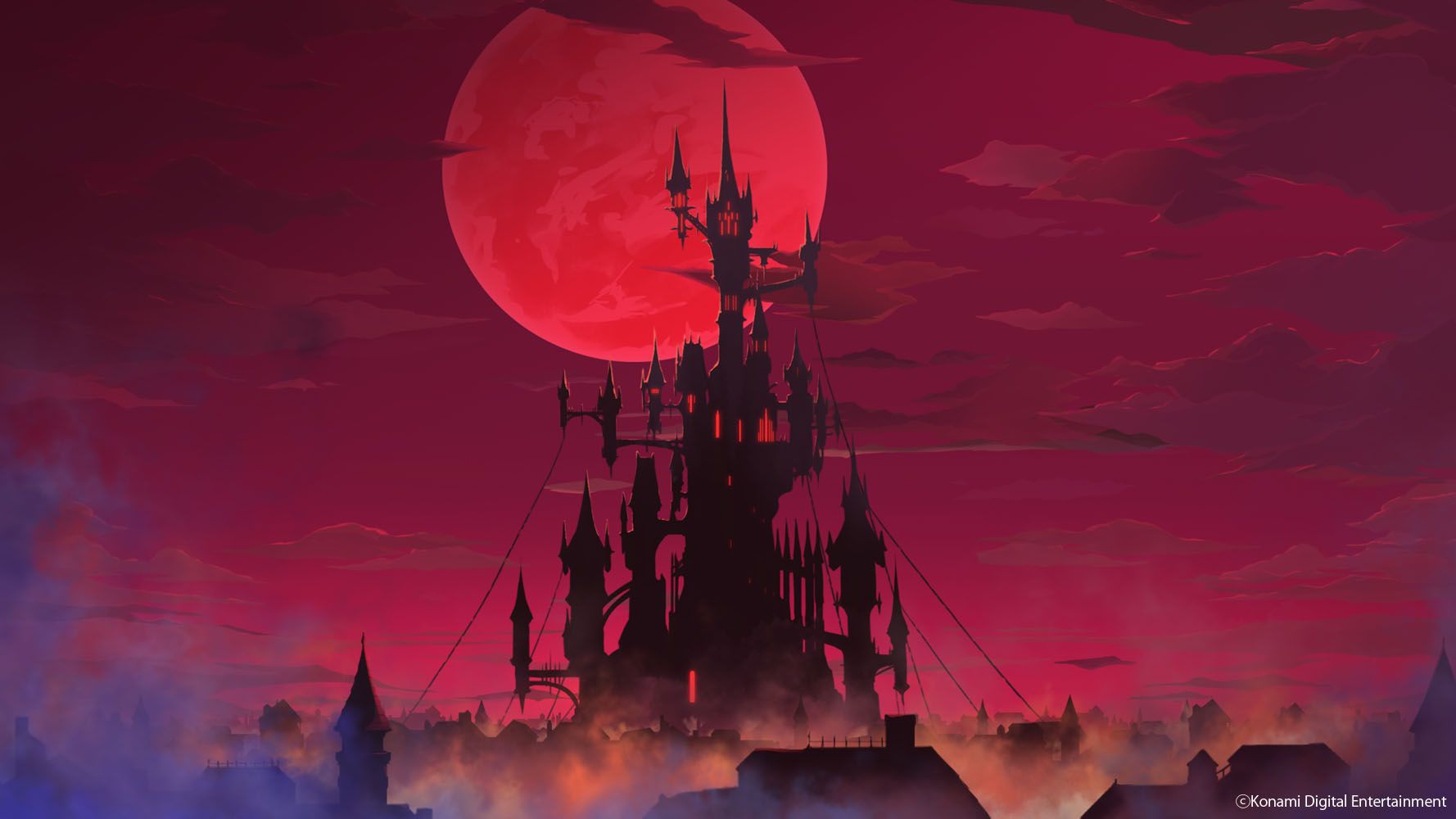
GamesRadar+ also stresses the visual identity, describing gothic architecture, painterly backgrounds, and an imposing Dracula’s Castle that anchors the adventure . ComicBook.com’s review similarly praises richly detailed environments, hidden clues, and the way the world communicates through its rooms, statues, notes, and environmental hints .
The result is not simply nostalgia. Belmont’s Curse is being praised because it seems to understand why Castlevania imagery has lasted: the castle, the whip, the candlelit corridors, the monsters, and the doomed family melodrama all operate as part of a playable mood. The best reviews argue that Evil Empire has not merely borrowed iconography but built mechanics around the feeling of stalking evil through a world that is beautiful, readable, and hostile .
Rose Belmont and a modernized family drama
Belmont’s Curse also introduces Rose Belmont, framed in several reviews as the daughter of Trevor Belmont and Sypha Belnades, with the game positioned after Castlevania 3: Dracula’s Curse and in conversation with the broader animated-era popularity of the franchise . That lineage matters. The new protagonist is not just a cosmetic swap; she gives the game a way to revisit inheritance, expectation, and the pressure of carrying the Belmont name.
TechRadar describes Rose as a likable protagonist whose personal struggle and cursed arm help give shape to the adventure, even if the story sometimes feels surface-level . GamesRadar+ is more enthusiastic about the drama, pointing to Belmont family stakes, the mystery around Rose’s curse, and familiar franchise figures as part of the game’s appeal for long-time fans . ComicBook.com also sees the story and world design as evidence that Evil Empire understands the franchise rather than treating it as a skin for a generic action game .
That narrative framing supports the “near-perfect” label because Metroidvanias benefit when backtracking has emotional as well as mechanical context. A route is more compelling when the world feels wounded, when bosses are more than locks, and when optional discoveries hint at the larger curse hanging over the map.
The caveats: safe design, navigation, and music
The critical consensus is not universal, and the reservations are worth taking seriously. VGC gives Belmont’s Curse 3 out of 5, arguing that while the game looks and sounds excellent, its core mechanics feel too familiar in a genre that has evolved dramatically during Castlevania’s long 2D absence . That review portrays the game as solid and safe rather than genre-defining, suggesting that the modern Metroidvania landscape has raised the bar .
Other positive reviews identify more specific blemishes. TechRadar flags notable audio and visual glitches, early complexity, and a story that can feel thin . GamesRadar+ praises the adventure overall but points to difficult boss wayfinding, limited fast travel, and an underwhelming soundtrack as drawbacks . Polygon also notes friction around menu-based swapping for Arcana and equipment, suggesting that some systems interrupt the flow even if the broader design remains strong .
These criticisms do not erase the praise; they define its limits. Belmont’s Curse is being received less as a radical reinvention than as a polished, atmospheric, deeply playable revival. For many critics, that is enough to make it one of the year’s standout Metroidvanias. For skeptics, it is exactly why the game falls short of greatness: it perfects familiar moves more than it invents new ones.
Verdict: near-perfect because it remembers what Castlevania is
The current review picture supports the subject’s central claim: Castlevania: Belmont’s Curse is being treated as a top Metroidvania, with near-perfect notices from several major outlets and particularly strong praise for platforming, world design, atmosphere, and the pleasure of controlling Rose Belmont . Its importance is not only that Castlevania is back, but that it returns to a genre that has grown without it and still finds room to matter.
The most persuasive praise centers on synthesis. Belmont’s Curse blends Dead Cells-like responsiveness with Castlevania’s gothic identity, adds Arcana-based rewards to exploration, and builds a world where Paris and Dracula’s Castle are both spectacle and structure . It may not be the most experimental Metroidvania of the decade, and not every critic is convinced that it can dominate a crowded field . But the dominant takeaway from the October 13 review wave is clear: Belmont’s Curse is a polished, atmospheric, and highly accomplished revival that earns its place near the top of the modern Metroidvania conversation.
Sources from the last 72 hours
- [1]Castlevania: Belmont’s Curse review: a classic platformer given fresh new bloodOct 13, 2026, 2:00 AM
- [2]Castlevania: Belmont's Curse review: "Gothic brilliance and compellingly cryptic clues mark a triumphant return for the iconic series"Oct 13, 2026, 2:00 AM
- [3]Castlevania: Belmont's Curse Is a Glorious Return of the Eternal Night (Review)Oct 13, 2026, 5:01 AM
- [4]Castlevania Belmont’s Curse review: The first new 2D entry in 13 years looks incredible but lacks teethOct 13, 2026, 9:00 AM
- [5]Castlevania: Belmont’s Curse Is a Near-Perfect MetroidvaniaOct 13, 2026, 9:01 AM
AI-generated article based on recent web research, then preserved as a dated editorial snapshot.